

Archiving your JD Edwards data: Why It’s Simpler Than You Think
Many organisations know they should archive data, but don’t know where to start. Find out how a phased, practical approach can deliver real results without over-engineering the process.
Read more >
JD Edwards Address Book Purging: FAQs
Inspired by the recent article by Jeanne Robbins, published in JDEtips Knowledge Express, we've answered some common questions around Address Book purging.
Read more >
Introducing Purge-it Release 5.3
With the latest release of Purge-it we've focused on giving JD Edwards users more insight, more control and better archiving results
Read more >
Does Data Archiving have a role to play in JDE Data Governance?
We're looking at how managing data through its lifecycle can help support effective JD Edwards data governance.
Read more >
JD Edwards E1 Upgrade SIG presentation
Catch-up with Richard Wilde's June presentation to the E1 Upgrade SIG: Data Archiving as an Upgrade Enabler
Read more >
Handling big data with Purge-it
Discover how Purge-it handles large volumes of JD Edwards data in this blog article
Read more >
The year in review
Looking back on 2025 milestones and ahead to more JD Edwards in 2026!
Read more >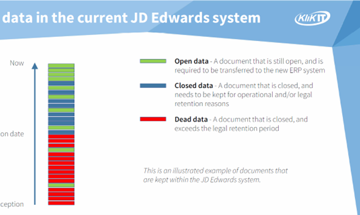
How do you manage JD Edwards data without JD Edwards?
As your JD Edwards system is retired you may start to lose JD Edwards skills and knowledge. Find out how to address this challenge.
Read more >
Data Management for your JD Edwards Data
Is your organization thinking about the subject of data retention for your JD Edwards system? In this article we explore key discussion points around developing a meaningful Data Retention Policy.
Read more >
What is Data Archiving?
Find out how Data Archiving and Data Purging fit into Data Lifecycle Management
Read more >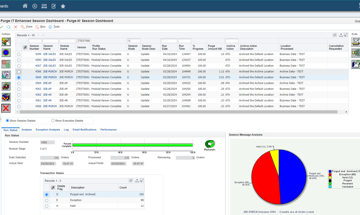
How to delete JD Edwards data that has passed its retention date and not just archive it
If your data archive is growing and you need to take action, check out how functionality in Purge-it Version 5.2 allows the possibility to completely remove old data from the archive
Read more >
How to measure the success of Data Archiving (Part 3)
In the final part of this 3 part series of blog articles 'measuring the success of data archiving', we look at two more customer examples
Read more >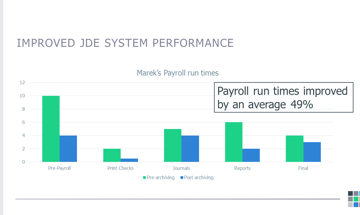
How to measure the success of Data Archiving (Part 2)
In part 2 of 'measuring the success of data archiving', we look at real customer examples
Read more >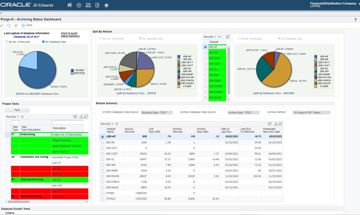
How to measure the success of Data Archiving (Part 1)
Can you measure the impact of data archiving? How do you demonstrate ROI? We address these questions and others in this JD Edwards article
Read more >
What is Oracle Validated Integration (OVI)?
Find out how Klik IT achieving Oracle Validated Integration with JD Edwards EnterpriseOne Expertise for its integration of Purge-it can help you and your organization
Read more >
Purge-it Version 5.2 FAQs
Explore some of the most frequently asked questions relating to the latest release of the JD Edwards data archiving solution, Purge-it
Read more >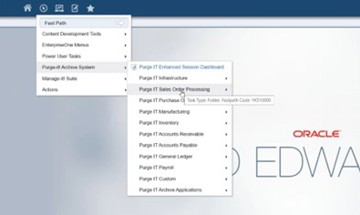
Is Purge-it easy to use for E1 data archiving?
Purge-it customers tell us one of the key drivers for choosing the data archiving solution is its usability. In this blog post we look at the main factors that make Purge-it easy to use.
Read more >
What is Purge-it?
Find out all about Purge-it. How it works, who it's for and what it offers JD Edwards users
Read more >
Get a JD Edwards data healthcheck
In this blog post we look at how the JD Edwards data archiving solution Purge-it! gives your JD Edwards system a health check.
Read more >
30 features of Data Archiving with Purge-it
Discover the top 30 features of data archiving with Purge-it that make it a truly easy product to implement.
Read more >
What is JD Edwards Archiving as a Service?
You're no doubt familiar with the as a Service model. Discover the business benefits of opting for Archiving as a Service for your JD Edwards E1 data archiving needs in this blog post.
Read more >
8 reasons to automate your JD Edwards archiving
Checkout this second blog post on archive automation. We zoom in on the 8 top reasons to automate your JD Edwards archiving.
Read more >
What is archive automation for JD Edwards?
Find out how human intervention in the routine task of archiving JD Edwards data can be greatly reduced. We’re talking about archive automation. It can help achieve remarkable ongoing efficiencies.
Read more >
What is meant by an integrated JD Edwards archiving solution?
What's the difference between an external and an internal archiving product when it comes to JD Edwards archiving? Read our short blog post as we summarize the differences.
Read more >
Why is JD Edwards running slow?
Deteriorating system performance negatively impacts many job functions across an organization. Find out why you system is slow. Discover how to speed up your JD Edwards system and enhance the user experience.
Read more >
Find out which version of Purge-it your organization is running
Make sure your organization is maximizing its use of the archiving solution Purge-it Find out which software version you have. Discover the latest product enhancements and new Purge-it features and functionality.
Read more >
How Klik IT started 25 years ago...and what's next?
As Klik IT celebrates 25 years in business in 2023, we took some time out to chat to CEO, Terry Clarke.
Read more >
Find a JD Edwards archiving solution that works for your business. Ask these 5 questions.
Is your organization looking for a 3rd party archiving solution?
Checkout 5 key questions to ask when evaluating JD Edwards archiving tools and solutions.
Read more >
Data Retention & Security
Data Retention and Security is a hot topic and a vast subject.
In this Blog post we look at Data Retention and Security from the perspective of organizations running JD Edwards. We cover the key considerations as we see them and provide links to industry articles and information for a broader view of the subject.
Read more >Archiving your JD Edwards data: Why It’s Simpler Than You Think

Many organizations know they have a growing volume of data in JD Edwards. They know data retention and data compliance are areas that need to be addressed.
As the database size continues to grow, the user experience worsens and costs can rise due to increased storage requirements.
Why does data archiving stay on the "someday" list?
In this blog, we address the reasons why archiving doesn’t need to be a large complex project. We look at a practical approach that removes the months of endless planning and testing and the significant commitment of resources that goes alongside this.
What are some of the barriers to archiving?
When organizations consider archiving, they often assume they need to:
-
Address every module at once
-
Wait for the perfect Enterprise-wide Retention Policy
-
Test all the historical data
-
Treat exceptions as a project blocker
-
Create large project teams and governance structures
-
Hold back production deployment until everything is complete
These activities can turn a practical initiative into a lengthy programme with no clear finish line.
The risk is that the project never gains momentum, despite the business recognizing the need to improve data management.
Take a pragmatic approach.
Start with one area and prove the process .
Archiving EnterpriseOne data doesn’t have to be a disruptive, multi-year initiative. A more effective approach is to focus on one module at a time.
Start with a manageable area of JD Edwards, prove the process, move it into production, automate it, then move onto the next module when the organization is ready.
Each module becomes a deliverable in its own right.
Instead of waiting for a single, distant go-live date, organizations begin seeing value early and can expand their archiving strategy over time.
8 step approach to data archiving:
-
Choose a module
-
Agree the retention point
-
Configure the archive job
-
Test a representative selection of data
-
Review archive results and exceptions
-
Approve and run in Production
-
Schedule and monitor the ongoing process
-
Move on to the next module when ready
One Module. One Controlled Cycle. Repeat
Start with a clear, limited objective
You don't need all the answers before you begin
One of the misconceptions surrounding data archiving is that every retention rule and business requirement must be defined before work can begin.
In reality, organizations often only need enough agreement to start safely.
For an initial archiving project, the key questions are typically:
-
Which companies and environments are included?
-
What retention date will be applied?
-
Who will review and approve the results?
By keeping the scope focused, organizations can gain experience, demonstrate success and establish confidence before expanding archiving into additional areas.
Why a JD Edwards native approach matters
The success of a phased archiving strategy depends heavily on the data archiving tools being used.
Maintaining control throughout the process
A common concern with archiving is maintaining visibility and control over what happens to data.
Purge-it addresses this through:
-
Document-level processing
-
Configurable functional validations
-
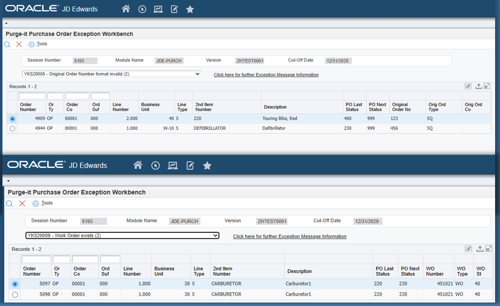
Detailed audit and exception information
-
Reversible processing when required
From project to ongoing process
Think progress, not perfection
Organizations that achieve the most success with EnterpriseOne data archiving are rarely the ones that spend years designing the perfect strategy. They are the organizations that start.
They select a suitable area of JD Edwards, establish a clear objective, prove the process and build from there.
Data archiving doesn't have to be a major transformation programme. The best approach can be to achieve one successful outcome, then repeat it.
Looking beyond archiving to data lifecycle management
Archiving should not be viewed as a single event. It is one stage within a broader data lifecycle.
A complete data lifecycle strategy considers how data moves from production into archive environments, whether archived data is retained indefinitely or moved to secondary storage and how information is ultimately managed throughout its lifecycle.
Why selecting the right data archiving tool matters
A phased archiving strategy works best when the software supports a practical, operational approach.
Purge-it works in ways that are familiar to JD Edwards teams. This reduces the learning curve and simplifies implementation.
Processing options, data selection, batch versions and functional modules align with standard JD Edwards concepts. For JDE users, data archiving can become part of normal JD Edwards administration rather than a specialist technical activity.
The bottom line
JD Edwards data archiving doesn’t need to be a large, disruptive programme with a distant finish line.
The most successful organizations often start with one module, one controlled cycle and one achievable objective. They prove the process, implement it in production, automate it then expand at a pace that works for the business.
By taking a pragmatic, module-by-module approach, organizations can begin realising the benefits of data archiving sooner, while reducing project complexity and risk.
News Snapshot...
Discover how to identify quick wins, set realistic goals and create an archiving strategy that works for your JD Edwards environment.
A phased, practical approach can deliver real results for the business without over-engineering the process.
One of the misconceptions surrounding data archiving is that every retention rule and business requirement must be defined before work can begin.
By keeping the scope focused, organizations can gain experience, demonstrate success and establish confidence before expanding archiving into additional areas.