

Introducing Purge-it Release 5.3
With the latest release of Purge-it we've focused on giving JD Edwards users more insight, more control and better archiving results
Read more >
Does Data Archiving have a role to play in JDE Data Governance?
We're looking at how managing data through its lifecycle can help support effective JD Edwards data governance.
Read more >
JD Edwards E1 Upgrade SIG presentation
Catch-up with Richard Wilde's June presentation to the E1 Upgrade SIG: Data Archiving as an Upgrade Enabler
Read more >
Handling big data with Purge-it
Discover how Purge-it handles large volumes of JD Edwards data in this blog article
Read more >
The year in review
Looking back on 2025 milestones and ahead to more JD Edwards in 2026!
Read more >
How do you manage JD Edwards data without JD Edwards?
As your JD Edwards system is retired you may start to lose JD Edwards skills and knowledge. Find out how to address this challenge.
Read more >
Data Management for your JD Edwards Data
Is your organization thinking about the subject of data retention for your JD Edwards system? In this article we explore key discussion points around developing a meaningful Data Retention Policy.
Read more >
What is Data Archiving?
Find out how Data Archiving and Data Purging fit into Data Lifecycle Management
Read more >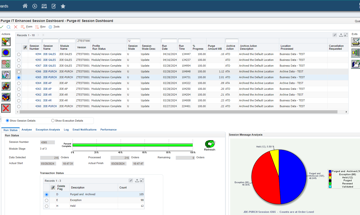
How to delete JD Edwards data that has passed its retention date and not just archive it
If your data archive is growing and you need to take action, check out how functionality in Purge-it Version 5.2 allows the possibility to completely remove old data from the archive
Read more >
How to measure the success of Data Archiving (Part 3)
In the final part of this 3 part series of blog articles 'measuring the success of data archiving', we look at two more customer examples
Read more >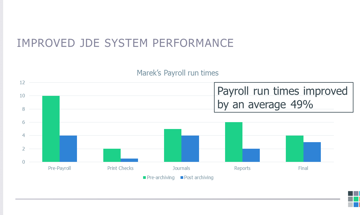
How to measure the success of Data Archiving (Part 2)
In part 2 of 'measuring the success of data archiving', we look at real customer examples
Read more >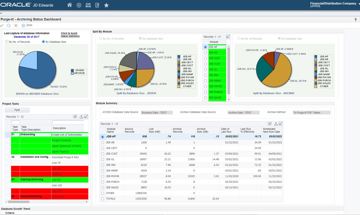
How to measure the success of Data Archiving (Part 1)
Can you measure the impact of data archiving? How do you demonstrate ROI? We address these questions and others in this JD Edwards article
Read more >
What is Oracle Validated Integration (OVI)?
Find out how Klik IT achieving Oracle Validated Integration with JD Edwards EnterpriseOne Expertise for its integration of Purge-it can help you and your organization
Read more >
Purge-it Version 5.2 FAQs
Explore some of the most frequently asked questions relating to the latest release of the JD Edwards data archiving solution, Purge-it
Read more >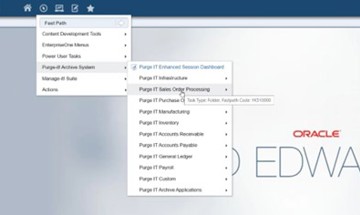
Is Purge-it easy to use for E1 data archiving?
Purge-it customers tell us one of the key drivers for choosing the data archiving solution is its usability. In this blog post we look at the main factors that make Purge-it easy to use.
Read more >
What is Purge-it?
Find out all about Purge-it. How it works, who it's for and what it offers JD Edwards users
Read more >
Get a JD Edwards data healthcheck
In this blog post we look at how the JD Edwards data archiving solution Purge-it! gives your JD Edwards system a health check.
Read more >
30 features of Data Archiving with Purge-it
Discover the top 30 features of data archiving with Purge-it that make it a truly easy product to implement.
Read more >
What is JD Edwards Archiving as a Service?
You're no doubt familiar with the as a Service model. Discover the business benefits of opting for Archiving as a Service for your JD Edwards E1 data archiving needs in this blog post.
Read more >
8 reasons to automate your JD Edwards archiving
Checkout this second blog post on archive automation. We zoom in on the 8 top reasons to automate your JD Edwards archiving.
Read more >
What is archive automation for JD Edwards?
Find out how human intervention in the routine task of archiving JD Edwards data can be greatly reduced. We’re talking about archive automation. It can help achieve remarkable ongoing efficiencies.
Read more >
What is meant by an integrated JD Edwards archiving solution?
What's the difference between an external and an internal archiving product when it comes to JD Edwards archiving? Read our short blog post as we summarize the differences.
Read more >
Why is JD Edwards running slow?
Deteriorating system performance negatively impacts many job functions across an organization. Find out why you system is slow. Discover how to speed up your JD Edwards system and enhance the user experience.
Read more >
Find out which version of Purge-it your organization is running
Make sure your organization is maximizing its use of the archiving solution Purge-it Find out which software version you have. Discover the latest product enhancements and new Purge-it features and functionality.
Read more >
How Klik IT started 25 years ago...and what's next?
As Klik IT celebrates 25 years in business in 2023, we took some time out to chat to CEO, Terry Clarke.
Read more >
Find a JD Edwards archiving solution that works for your business. Ask these 5 questions.
Is your organization looking for a 3rd party archiving solution?
Checkout 5 key questions to ask when evaluating JD Edwards archiving tools and solutions.
Read more >
Data Retention & Security
Data Retention and Security is a hot topic and a vast subject.
In this Blog post we look at Data Retention and Security from the perspective of organizations running JD Edwards. We cover the key considerations as we see them and provide links to industry articles and information for a broader view of the subject.
Read more >Introducing Purge-it Release 5.3

More Insight, More Control, Better Archiving Results
With the latest release of Purge-it, we’ve focused on giving JD Edwards users greater visibility of their data during the data archive process, along with more options for dealing with the realities of older and imperfect data.
Before diving into what’s new in Release 5.3, it’s worth revisiting a couple of powerful features introduced recently that you may have missed.
A quick recap
Recent Purge-it functionality you may have missed
Global Audit Inquiry
The Global Audit Inquiry application makes it easier to track when specific documents were processed by Purge-it.
If you’re trying to answer questions like:
- Have these documents been archived?
- Which session were they processed in?
Global Audit Inquiry allows you to search for specific documents and view the archive sessions they were processed in. For customers managing volumes of historical data, this application can be valuable for audit and investigation purposes.
Archiving… the Archive
Many customers have been on JD Edwards for 10+ or 20+ years. Archiving data is well established, but an increasing number of customers are asking a new question:
What do we do with the oldest data sitting in our archive database?
Whether driven by compliance or storage optimization requirements, customers want the ability to further reduce archive data volumes.
To support this, we’ve enabled “Archive the Archive” processing across all standard Purge-it modules.
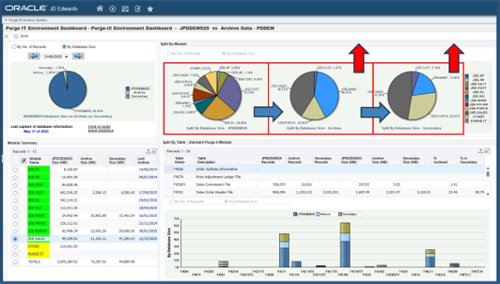
The screenshot below of the Purge-it Environment Dashboard illustrates this.
This environment is configured for Archive the Archive
- The first pie chart shows production data, broken down by functional module. This is the business data.
- The second pie chart represents the primary archive location, containing current archive data.
- The third pie chart introduces the optional secondary archive location, for offline storage, air‑gap or backup purposes.
A typical data archiving process flow might look like this:
Production to archive. This is standard archiving which moves data from production to the primary archive
- Purge the archive. Data is removed from the primary archive location
- Archive to secondary. Archived data is moved from the primary archive to a secondary archive
- Purge the secondary. Data is removed from the secondary archive location
“Archive the Archive” processing is configurable at module level using report processing options, allowing you to tailor the approach to each area of the business.
What’s new in Purge-it 5.3
The NEW Exception Workbench
Exception information is a core strength of Purge-it.
Until now, exception data has been available through session dashboards and enquiry forms, showing:
- Which documents were not archived
- The exception reason
While useful, this exception information was limited to the document or batch number and the exception error message, meaning users needed to drill through layers of JD Edwards data to understand the root cause.
That changes in Purge-it 5.3
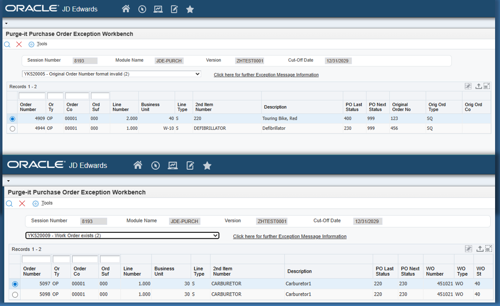
The new Exception Workbench provides detailed, contextual insight into each exception, allowing users to quickly answer questions such as:
- Which part of an order number format is invalid?
- Which works order numbers are related to a purchase order?
Exception analysis is now faster and clearer by accessing the information directly from the Session Dashboard.
The Exception Workbench provides an excellent starting point for data cleansing exercises, if required. It can help teams identify data quality issues more efficiently.
NEW Full Exception Overrides
A fundamental principle of Purge-it is robust data validation, ensuring document and batch level data integrity is maintained throughout the archiving process.
Prior to Release 5.3, some validation levels were already configurable to support business requirements for archiving data. For example:
- Validating related documents
- Enabling transactional cross modular validation
There are also a limited number of direct exception overrides available in specific areas, (2 in Purchasing and 1 in Inventory) that allow the user to turn off specific validation at a version level.
However, many customers told us poor data quality is a concern, especially data that is very old. Some customers feel dirty data could hamper their data archiving efforts and it’s not always possible or realistic to clean the data for a variety of business reasons.
In response to this feedback, new functionality in Release 5.3 gives the option to choose to bypass the exceptions that are causing data to not archive. The exception message override capabilities have been extended to include all functional validation exceptions.
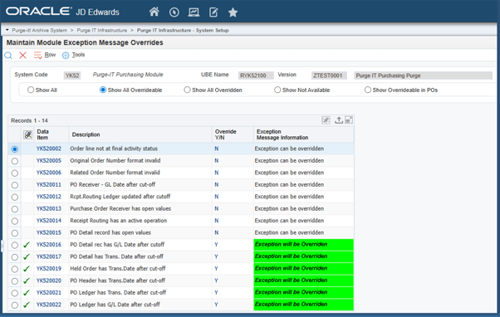
If fixing the JD Edwards data isn’t practical, users can now:
Select exactly which exceptions they want to override
- Allow archiving to proceed where those exceptions would otherwise block it
- Apply overrides in a controlled, intentional way
This new approach gives organizations the choice and flexibility to balance data integrity with practical archiving goals — especially when dealing with legacy data.
Designed around real‑world JDE data challenges
Purge-it Release 5.3 is the result of direct customer feedback from organizations dealing with:
- Long‑running JD Edwards systems
- Large volumes of historical data
- Inconsistent or incomplete legacy records
By combining deeper exception insight with greater control over how exceptions are handled, this new Purge-it software release helps customers spend less time diagnosing problems and more time achieving meaningful data archiving results.
What’s next?
Existing Purge-it customers
Ø Find out what release of Purge-it your organization is currently running
Ø Request a quote to upgrade to Release 5.3 *
Ø Ask about Purge-it Reboot if you need support with getting archiving back in the spotlight
New customers
Ø Request a complimentary JDE Data Analysis.
This provides visibility of data volumes and data distribution across your system
Ø Book a Purge-it demo for your team
Ø Sign up to receive the Insights newsletter
* Purge-it Release 5.3 is available for users of Oracle JD Edwards 9.2, 32 bit and 64 bit systems.
News Snapshot...
Designed around real‑world JDE data challenges
Purge-it Release 5.3 is the result of direct customer feedback from organizations dealing with:
- Long‑running JD Edwards systems
- Large volumes of historical data
- Inconsistent or incomplete legacy records
Combining deeper exception insight with greater control over how exceptions are handled, Purge-it Release 5.3 helps customers spend less time diagnosing problems and more time achieving meaningful data archiving results.
This new approach gives organizations the choice and flexibility to balance data integrity with practical archiving goals — especially when dealing with legacy data.